Merchant Account Services are the foundation of modern payment processing. These services help businesses to accept credit cards, debit cards, mobile payments, and online payments securely and efficiently.
Whether you run a small retail store, an eCommerce website, restaurant, or a growing service business, it is essential to choose the right merchant account services as it impacts cash flow, customer experience, and overall profits.
Operating in this highly competitive market, customers expect fast, smooth, and secure transactions. Hence, it is essential to offer a reliable merchant account provider to customers for achieving success for businesses.
A merchant account is a specialized bank account that holds funds from card transactions temporarily before the funds get transferred to your business bank account.
Beyond payment acceptance, most merchant services providers such as Ace Merchant Processing offer tools such as payment gateways, point-of-sale(POS) systems, fraud protection, recurring billing, chargeback management, and reporting features.
These merchant services simplify payment processing and also keep transactions safe and compliant.
It is essential for businesses to understand merchant account services work before selecting a provider. Every merchant account service has different service fees, approval requirements, processing speed, contract terms, security features, and customer support.
The right merchant solution should match with your business type, transaction volume, and sales channels whether you sell your products in-store, online or both.
This blog will walk you through the basics of merchant account services, about how their services work, important benefits, common fees, and essential features to look for while selecting the best provider.
If businesses want to improve payment processing , reduce transaction problems, and build a better checkout experience for customers, understanding merchant accounts is the first step for building a profitable business.
Also Read: Merchant Processing Services Explained for Small Businesses
What Is a Merchant Account?
A merchant account is a specialized business account which helps businesses to accept electronic payments from customers. Whether a customer makes payments using a credit card, debit card, or another digital payment method, the money does not go directly into the regular bank account of the business instantly.
Instead, the funds are first placed in the merchant account for temporary holding before they are transferred to the company’s main business bank account.
Unlike a standard bank account, a merchant account is built specifically for payment processing. It works as a secure bridge between the customer’s bank and the merchant’s bank.
This process helps businesses to verify whether the payment is valid, confirm if the account has enough funds available, and ensures that the transaction is completed safely and efficiently.
This helps businesses to transfer the funds during the authorization, processing, and settlement phases of a payment.
Merchant account services are provided by banks or merchant service providers that work together with payment processors and major card networks.
For businesses who want to accept card payments smoothly and securely, having the right merchant account is an essential part of daily operations and customer service.
Also Read: What are Merchant Services and How do They Work for Businesses
How Merchant Account Services Work
Understanding how merchant account services work helps businesses to see how payments are transferred from the customer to the company. Although the process happens within seconds, several systems work together behind the scenes for authorizing, processing, and settling each transaction.
From the moment a customer taps his cards or enters payment details online, the merchant account has an important role in ensuring that the payment is verified and the funds are transferred safely.
Here is a simple breakdown of the merchant account payment process:
Step-by-Step Payment Process
1. Customer Initiates Payment
The process begins when a customer makes a purchase using a credit or debit card, mobile wallet. The customer may purchase through a payment terminal, online through a checkout page, or through a mobile application.
Then the customer enters the payment information or taps a card to begin the transaction.
2. Payment Authorization Request
Once the payment is submitted, the transaction details are sent through a payment gateway to the payment processor. The processor then forwards the request to the appropriate card network like Visa or Mastercard. This step ensures that the payment information is routed to the right financial institutions for approval.
Also Read: What Payment Methods Should Retailer Accept
3. Bank Approval
The customer’s issuing bank receives the request and checks if the card is valid, whether enough funds or credits are available, and whether the transaction appears valid. If every detail is accurate then the bank sends back an approval code while if detail is not accurate then the transaction is declined.
Also Read: How to Build a Payment Franchise With Ace Merchant Processing
4. Transaction Completion
After approval, the payment is accepted and the sale is completed. At this stage, the amount is placed on hold or reserved from the customer’s account. The customer receives confirmation about the payment and the business will proceed and deliver the product or service.
5. Funds Settlement
Finally, the approved funds are transferred into the merchant account. Once the payment is processed and settled, the amount is deposited into the business account mostly within 1 to 3 business days. The entire process will be fast, secure, and essential for smooth business transactions on an every day basis.
Types of Merchant Account Services
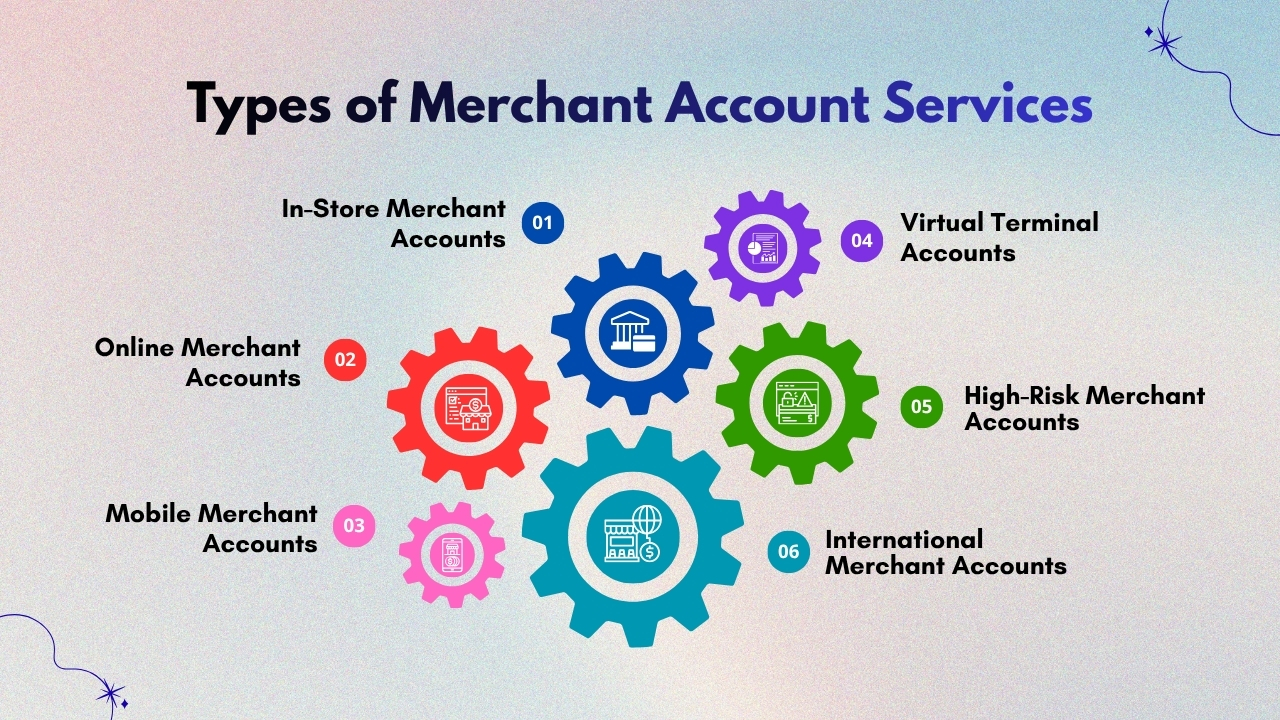
Every business has different payment requirements based on how and where they sell their products or services. That is why there are different types of merchant account services, where each merchant account services supports specific business models and transaction models.
Hence it is essential for businesses to choose the right merchant account type which improves payment efficiency, customer convenience, and business operations.
1. In-Store Merchant Accounts
In store merchant accounts are designed for businesses such as retail stores, restaurants, salons, and grocery shops. These accounts work with POS systems, card readers, and payment terminals to process face-to-face payments.
These accounts are ideal for businesses which regularly accept credit or debit cards, contactless payments at a checkout counter. In-store accounts have features such as receipt printing, inventory integration, and fast transaction processing to improve the customer experience.
2. Online Merchant Accounts
Online merchant accounts which are built for eCommerce businesses which accept payments through websites, online stores, or mobile apps. These accounts work together with a payment gateway to securely process digital transactions.
Such merchant accounts help businesses to accept a lot of payment options such as cards, digital wallets, and alternative online payment options. Such an account is crucial for businesses that sell products or services over the internet and require secure, reliable online payment processing.
3. Mobile Merchant Accounts
Mobile merchant accounts are essential for businesses who are always on the move such as food trucks, delivery services, repair technicians, market vendors, and field sales teams.
These accounts help businesses to accept payments from customers using mobile devices or tablets. It provides payment flexibility and convenience that makes it easy to process transactions anywhere.
For businesses which do not operate from a fixed location, mobile merchant accounts offer a practical and efficient payment solution.
4. Virtual Terminal Accounts
A virtual terminal account helps businesses to manually enter customer payment details through a secure online interface. Such a type of merchant account is used for phone orders, mail orders, or remote billing situations where the customer is not physically present.
Such merchant accounts are useful for service-based businesses such as call centers, offices which require payment without a card terminal. Virtual terminals offer a simple way to accept card payments securely from any computer or internet connected device.
5. High-Risk Merchant Accounts
Some industries are classified as high-risk as they experience higher chargeback rates, larger transaction volumes, or increased fraud problems. Businesses such as travel, subscription services, gaming, and certain online industries may require high-risk merchant accounts.
These accounts are designed with fraud protection, and risk management tools. Although fees may be high, they give high-risk businesses access to the payment processing services they require.
6. International Merchant Accounts
International merchant accounts are designed for businesses which sell their products or services to their customers in different countries. These accounts support multi-currency payments and global transaction processing which makes it easier for such businesses to expand internationally.
Such merchant accounts help companies to accept payments from international customers while reducing payment challenges and improving the checkout experience.
For businesses with a world wide audience, international merchant accounts are essential for smooth and secure cross border sales.
Also Read: Which Businesses Get Rejected for Online Merchant Account
Key Components of Merchant Account Services
Merchant account services rely on several important parts working together to make payment processing fast, secure, and reliable. Each component has a specific role in moving payment information from the customer to the business.
Understanding these core elements helps businesses see how transactions are approved, processed, and completed smoothly.
1. Payment Gateway
A payment gateway works as the bridge between the business and the payment processor. It securely captures customer payment details and sends them for processing.
In online transactions, the payment gateway is especially important because it encrypts sensitive card information and helps protect customer data from fraud or unauthorized access. It ensures that payment details are transferred safely and quickly.
2. Payment Processor
The payment processor is responsible for handling the transaction data once when payment is initiated. It communicates with the card network and the banks involved to check whether the transaction can be approved.
The processor helps move the payment through each stage, from authorization to final settlement. Without the processor, electronic payments would not be completed efficiently.
Also Read: Payment Gateway Vs Payment Processor
3. Card Networks
Card networks like Visa, Mastercard, and others play a crucial role in the payment process. They provide the infrastructure which connects the payment processor with the issuing and acquiring banks.
These networks help route transaction information correctly and ensure communication happens smoothly between all parties involved in the payment.
4. Issuing Bank
The issuing bank is the bank which provides the credit card or debit card to the customer. The job of the issuing bank is to verify the card details, check whether sufficient funds or credit are available, and approve or decline the transaction. This step is crucial for preventing failed or unauthorized payments.
5. Acquiring Bank
The acquiring bank is the merchant’s bank which receives the approved funds on behalf of the business. It works closely with the payment processor and manages the merchant account.
Once the transaction is settled, the acquiring bank helps transfer the money into the business’s primary bank account.
Together, these components create a complete system that allows businesses to accept electronic payments with confidence.
Benefits of Merchant Account Services
Merchant account services offer many benefits which help businesses to improve payment processing, increase customer satisfaction, and support long-term growth.
In today’s competitive market, customers expect fast, secure, and flexible payment options, and the right merchant account solution helps businesses meet those expectations while running operations more efficiently.
1. Accept Multiple Payment Methods
Merchant account services help businesses to accept credit cards, debit cards, contactless payments, and digital wallets. This payment flexibility makes it easier for customers to pay using their preferred payment method that improves convenience and supports smoother transactions.
Also Read: How to Choose the Best Merchant Service Provider
2. Increase Sales Opportunities
When businesses offer multiple payment methods, customers are more likely to complete their purchases. A convenient checkout experience can reduce abandoned transactions and create more opportunities for revenue growth.
3. Faster Transactions
Modern payment systems process payments within seconds which helps to reduce long checkout queues and wait times. Faster transactions improve efficiency for staff and create a better overall experience for customers.
4. Improved Cash Flow
Merchant account services offer quick settlement times, which allows businesses to receive funds in a short time. This helps businesses to maintain stable cash flow and makes it easier to manage daily operations and expenses.
5. Enhanced Security
Advanced security features such as encryption, tokenization, and fraud detection tools help protect sensitive customer payment information. This reduces the risk of fraud and builds trust with customers.
6. Better Customer Experience
Smooth, reliable, and secure payment processing gives a positive checkout experience to customers. Customers appreciate convenience and speed that can lead to higher satisfaction, repeat business, and stronger loyalty.
7. Business Scalability
As a business grows, merchant account services can grow with it. They support higher transaction volumes, additional sales channels, and expanding customer needs, making them a valuable long-term solution.
Also Read: Small Business Inventory Tracking
Features to Look for in Merchant Account Services
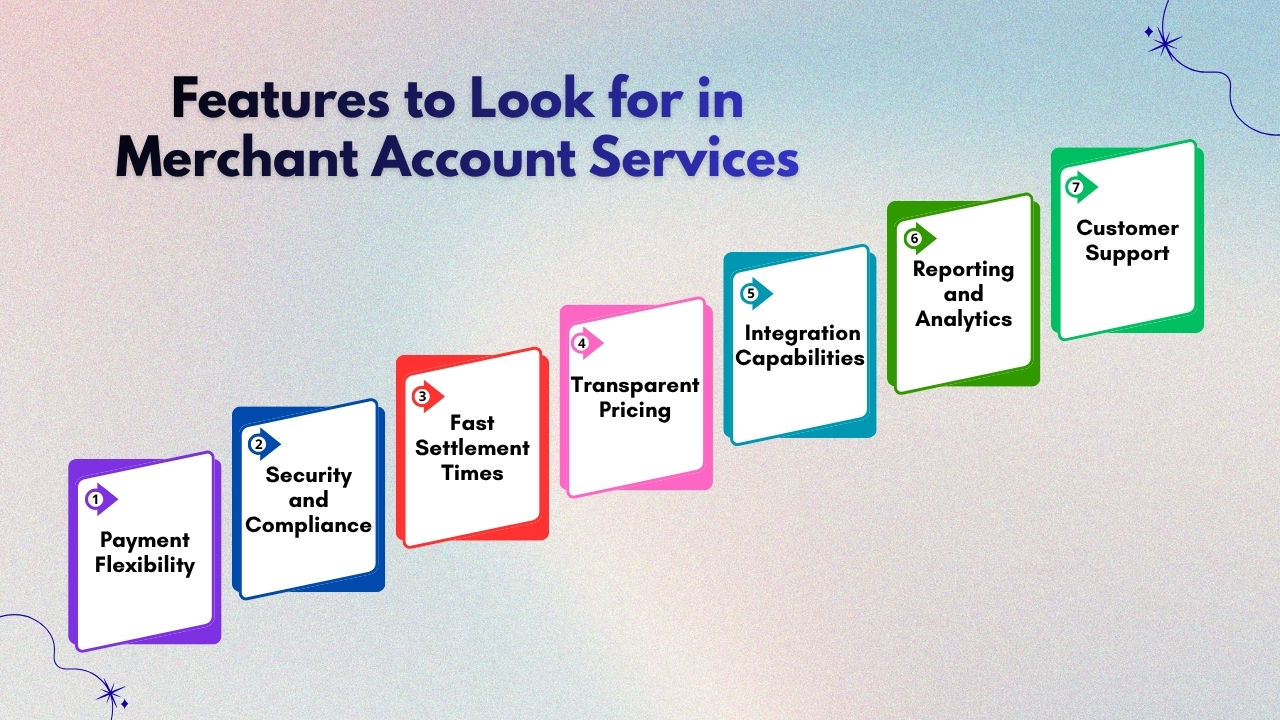
Choosing the right merchant account services provider is a crucial decision for any business. The best solution should not just process payments efficiently but also support security, flexibility, and long-term business growth.
Evaluating key features carefully can help businesses avoid unnecessary costs and choose a provider that matches their operational needs.
1. Payment Flexibility
A reliable provider must support multiple payment methods such as credit cards, debit cards, mobile wallets, and online payments so customers can make payments in the way that they prefer.
2. Security and Compliance
Strong security features are essential. Look for PCI compliance, encryption, tokenization, and fraud prevention tools to protect customer payment data.
3. Fast Settlement Times
Quick access to funds helps maintain healthy cash flow and allows businesses to manage daily expenses more effectively.
4. Transparent Pricing
Select a merchant account provider that has clear pricing and no hidden charges. Transparent fee structures make it easier to manage payment processing costs.
5. Integration Capabilities
Ensure that the merchant account that you select integrates smoothly with POS systems, accounting software, and eCommerce platforms for efficient operations.
6. Reporting and Analytics
Detailed reporting helps businesses to track transactions, track sales trends and make better financial decisions.
7. Customer Support
Reliable customer support is essential which helps businesses to resolve their customers quickly and reduce downtime, especially when payment systems are essential for daily operations.
Also Read: How to Manage a Small Business Efficiently Using Modern Payment Systems
Merchant Account Fees Explained
It is essential for businesses to understand merchant account fees to choose the right payment processing solution for your business. As different providers use different pricing models, the total cost may affect the business profits with time.
Understanding the most common fees helps businesses to compare providers accurately and avoid unwanted expenses.
1. Transaction Fees
Transaction fees are charged every time a customer makes a payment. These are usually a combination of a percentage of the transaction amount and a small fixed fee. Since they apply to every sale, they are one of the most crucial costs to review.
2. Monthly Fees
Some merchant account providers charge monthly fees for account maintenance, reporting tools, customer support, or access to payment services. Such recurring charges can change based on the provider and the service package.
3. Setup Fees
A setup fee may be charged while opening a new merchant account. This fee includes account creation, onboarding, and equipment or initial configuration costs.
4. Chargeback Fees
When a customer disputes a transaction, the provider may apply chargeback fees. Chargeback fees can add up instantly if disputes happen frequently.
5. PCI Compliance Fees
Some providers charge PCI compliance fees which covers security standards, tracking, and data protection requirements for handling card payments.
6. Gateway Fees
When businesses use a payment gateway for online payments, then the customers may pay fees separately for processing and securing digital transactions. Transparent pricing helps businesses to avoid any hidden costs and protect profits.
Also Read: Instant Approval Online Merchant Accounts
Security in Merchant Account Services
Security in merchant account services is crucial because businesses handle sensitive payment information every day.
When systems are not properly protected, then the card details of the customers can be exposed to fraud, theft, or cyberattacks. A secure payment system helps businesses to process transactions safely while gaining customer confidence.
Key security measures include:
- Encryption – This secures payment data while the data is being transmitted which makes it unreadable for unauthorized users.
- Tokenization – Tokenization replaces sensitive customer card details with secure tokens which reduces the risk of data exposure.
- PCI DSS Compliance – Such compliance ensures that businesses follow industry standards for storing and handling cardholder data securely.
- Fraud Detection Tools – Fraud detection tools help to track transactions and identify any suspicious activity in real time.
- Secure Authentication – Implementing extra verification steps like passwords or one-time codes add more security.
Investing in strong security systems reduces the chances of fraud, protects business reputation, and builds long-term trust with customers.
Also Read: High-Risk Merchant Account Instant Approval
How to Choose the Right Merchant Account Provider
Choosing the right merchant account provider is a crucial step which can impact your payment processing, customer experience, and overall business efficiency.
A well-aligned provider helps businesses to run smoothly while the wrong provider can cause higher expenses, delays, and unnecessary complexity.
1. Understand Your Business Needs
Begin by identifying the type of payment solution as your business requires. Some businesses may require in-store payment processing while other businesses may depend on online payments, mobile payments.
2. Compare Pricing Models
Different providers offer different pricing like flat-rate, tiered, or interchange-plus pricing. It is essential for businesses to compare these prices carefully and choose the pricing that fits to your transaction size and monthly volume.
3. Check Reputation and Reviews
It is essential for businesses to research about the provider’s reputation by reading customer reviews, testimonials, and industry feedback. It helps businesses to understand their reliability, service quality, and trustworthiness.
4. Evaluate Integration Options
Ensure that the merchant account provider integrates smoothly with your current POS systems, accounting tools, or eCommerce platforms to avoid workflow problems.
5. Assess Security Features
Choose a provider which offers strong security through PCI compliance, encryption, and fraud prevention tools to keep payment data secure.
6. Test Customer Support
It is essential to ensure the merchant account provider has reliable customer support. Because quick and knowledgeable assistance helps to resolve technical or payment problems instantly.
7. Look for Scalability
Select a provider which can expand with your business and support future business expansion, higher sales volume, and changing payment requirements.
Merchant Account Services for Different Industries
Different industries depend on merchant account services in different ways as each business type has their own payment processing requirements, customer expectations, and compliance requirements.
So it is essential for businesses to choose the right merchant account services which helps to improve efficiency, security, and customer satisfaction.
1. Retail
Retail businesses require merchant account services which support quick checkout, POS integration, barcode systems, and multiple payment options. As speed and convenience matter in retail, reliable card processing and contactless payment support are essential for seamless in-store transactions and excellent customer service.
2. Restaurants
Restaurants require payment systems which handle quick transactions, split bills, and tip management. A merchant account for restaurants should also integrate with restaurant POS systems which support order tracking, fast billing, and efficient daily operations.
3. eCommerce
eCommerce businesses require secure online payment processing, payment gateway integration, fraud protection, and support digital wallets. As online stores often provide services for customers in different locations, many locations also benefit from global payment support and multi-currency processing.
4. Healthcare
Healthcare providers require merchant account services which offer strong data security and compliance with sensitive information regulations. Other than processing payments efficiently, these businesses must secure patient related financial data and maintain secure transaction systems.
5. Travel and Hospitality
Travel agencies, hotels, and hospitality businesses often require support for multi-currency payments, large transactions, advance bookings, and cancellations.
So it is essential for such businesses to have flexible payment systems for handling international customers and change reservation amounts.
6. Subscription Businesses
Subscription-based businesses require merchant account services with recurring billing and automated payment features. Such tools help to process repeat payments on time, reduce missed transactions, and build a convenient payment experience for customers.
Conclusion
Merchant account services are an essential part of modern business operations, as it helps businesses to accept secure and convenient electronic payments across multiple channels.
Whether a business operates in-store, online, on the go, or serves customers internationally, having the right merchant account provider helps to create a smooth payment experience that supports efficiency, security, and growth.
Whether payment gateways, processors, settlement times, fraud protection, every part of the system plays a crucial role in keeping transactions reliable and customer-friendly.
While businesses keep continuously evolving and have to adapt to changing customer expectations, having flexible and dependable payment processing solutions is no longer optional.
Customers require quick checkouts, multiple payment methods, and secure transactions, and merchant account services provide all these features. Such services also have important benefits like improved cash flow, better reporting, improved security, and the ability to scale as the business grows.
Choosing the right merchant account provider requires careful evaluation of features, fees, integrations, customer support, and industry-specific requirements.
A well aligned provider helps merchants to reduce payment issues, improve operational performance, and support long-term profits.
By understanding how merchant account services work and what to look for, businesses can make smarter decisions and build a stronger foundation for future success in an increasingly digital marketplace.
If you still have any query with merchant account services then you may book a free demo at Ace Merchant Solutions and we are more than happy to assist you.